Saint Hildegard von Bingen
1098–1179 · Abbess · Mystic · Composer · Healer · Doctor of the Church
Hildegard von Bingen was one of the most remarkable women of the medieval world — a Benedictine abbess, visionary, composer, healer, and theologian whose work continues to inspire scholars, artists, musicians, and spiritual seekers worldwide. Named a Doctor of the Universal Church by Pope Benedict XVI in 2012, she is only the fourth woman in history to receive this honor.
Explore Her World

Experience The Hildegard Way, a 12-day virtual pilgrimage into the life, theology, and visionary world of Saint Hildegard of Bingen.
Theology & Visions
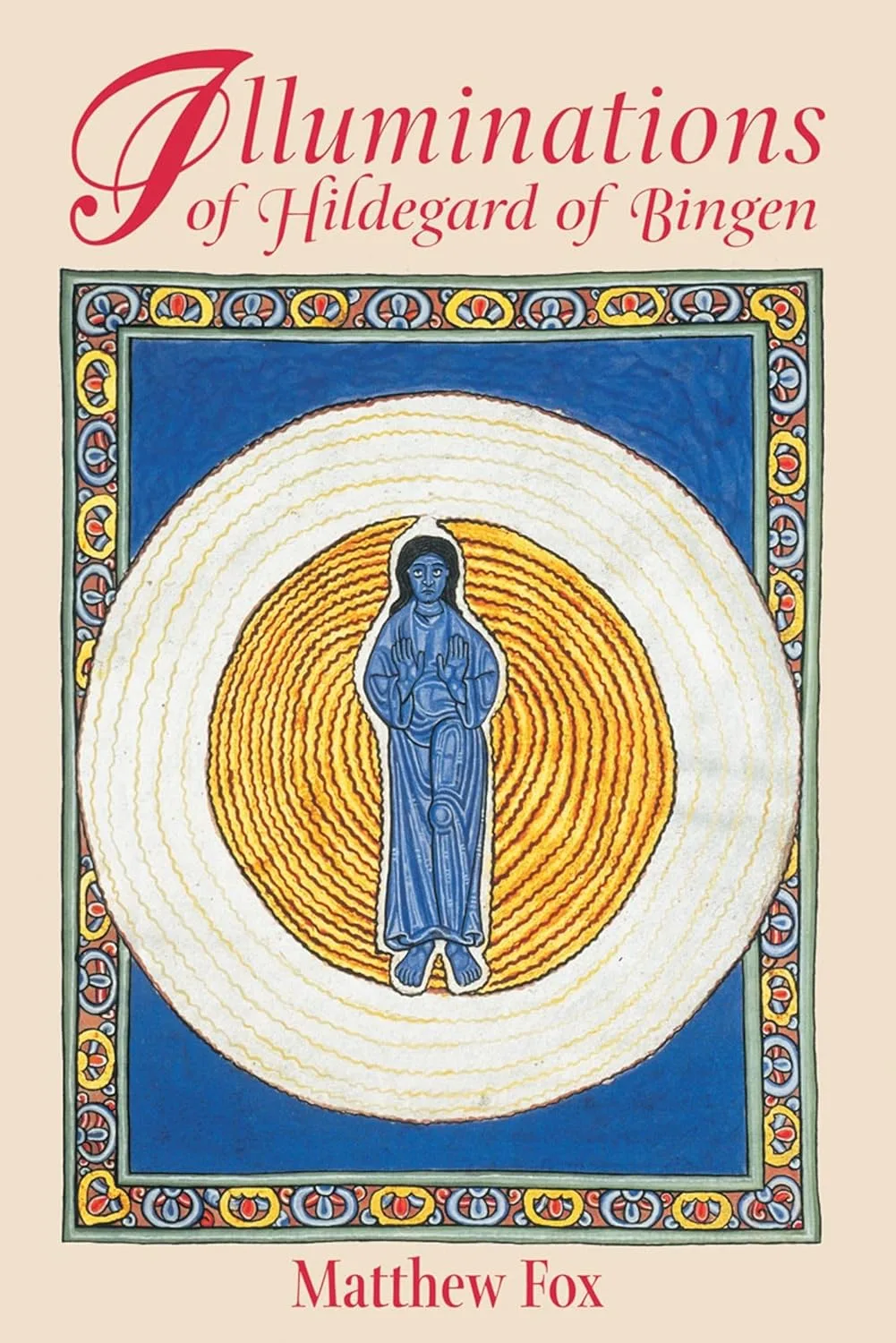
Hildegard received her first vision at age three. Her masterwork Scivias — Know the Ways — recorded 26 visions and established her as one of the great Christian mystics.
Learn more →Music & Composition
She composed over 70 liturgical songs and the first known morality play, Ordo Virtutum. Her music is still performed worldwide and recorded by leading ensembles.
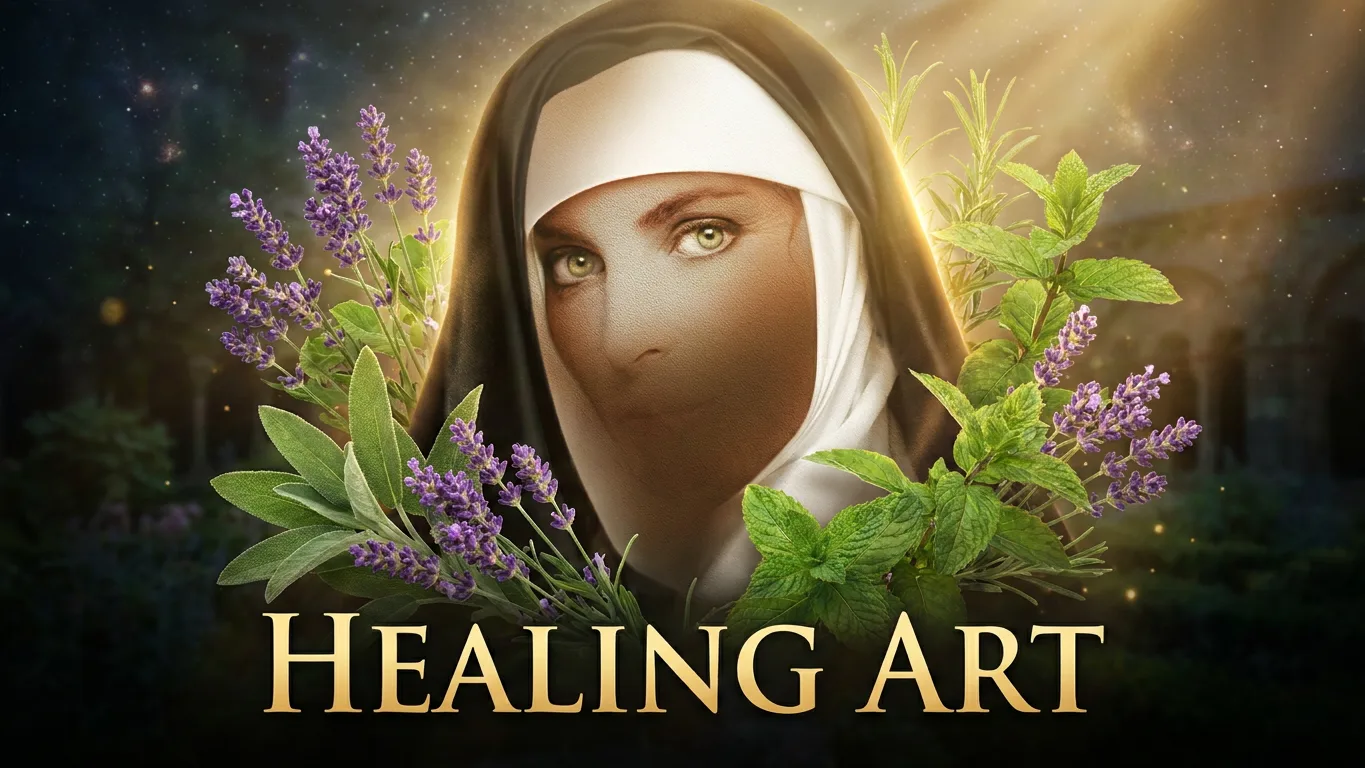
Learn more →Medicine & Herbalism
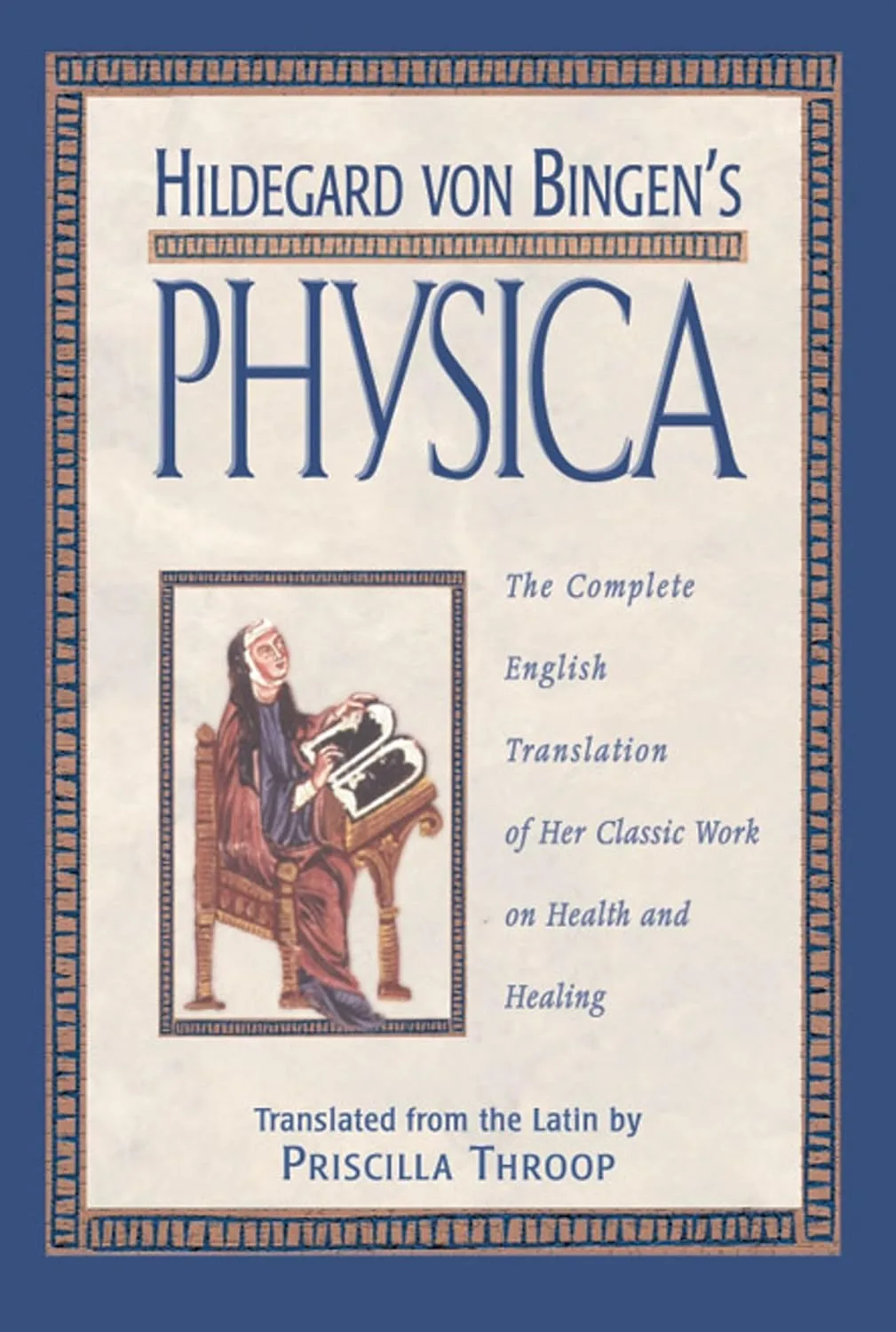
Her medical texts Physica and Causae et Curae documented hundreds of plants, animals, and minerals used in healing — foundational works in natural medicine.
Learn more →Viriditas
The greening power of God — Hildegard’s central theological concept — describes the divine life force present in all of creation. It remains one of her most enduring contributions.
Learn more →Her Life in Brief
Born in Bermersheim, Germany
The tenth child of a noble family in the Rhineland. Offered to the Church as a tithe at age eight, placed in the care of Jutta von Sponheim at Disibodenberg.
Disibodenberg
Lived and led a community at the Benedictine monastery for nearly 40 years. Began recording her visions under instruction from God and with the support of her teacher Volmar.
The Great Vision
At age 42, Hildegard received a divine command to write down her visions. This became Scivias, completed in 1151 and approved by Pope Eugenius III.
Founded Rupertsberg Abbey, Bingen
Against considerable opposition, Hildegard moved her community to a new monastery on the Rhine at Bingen, asserting independence and expanding her influence.
Founded Eibingen Abbey
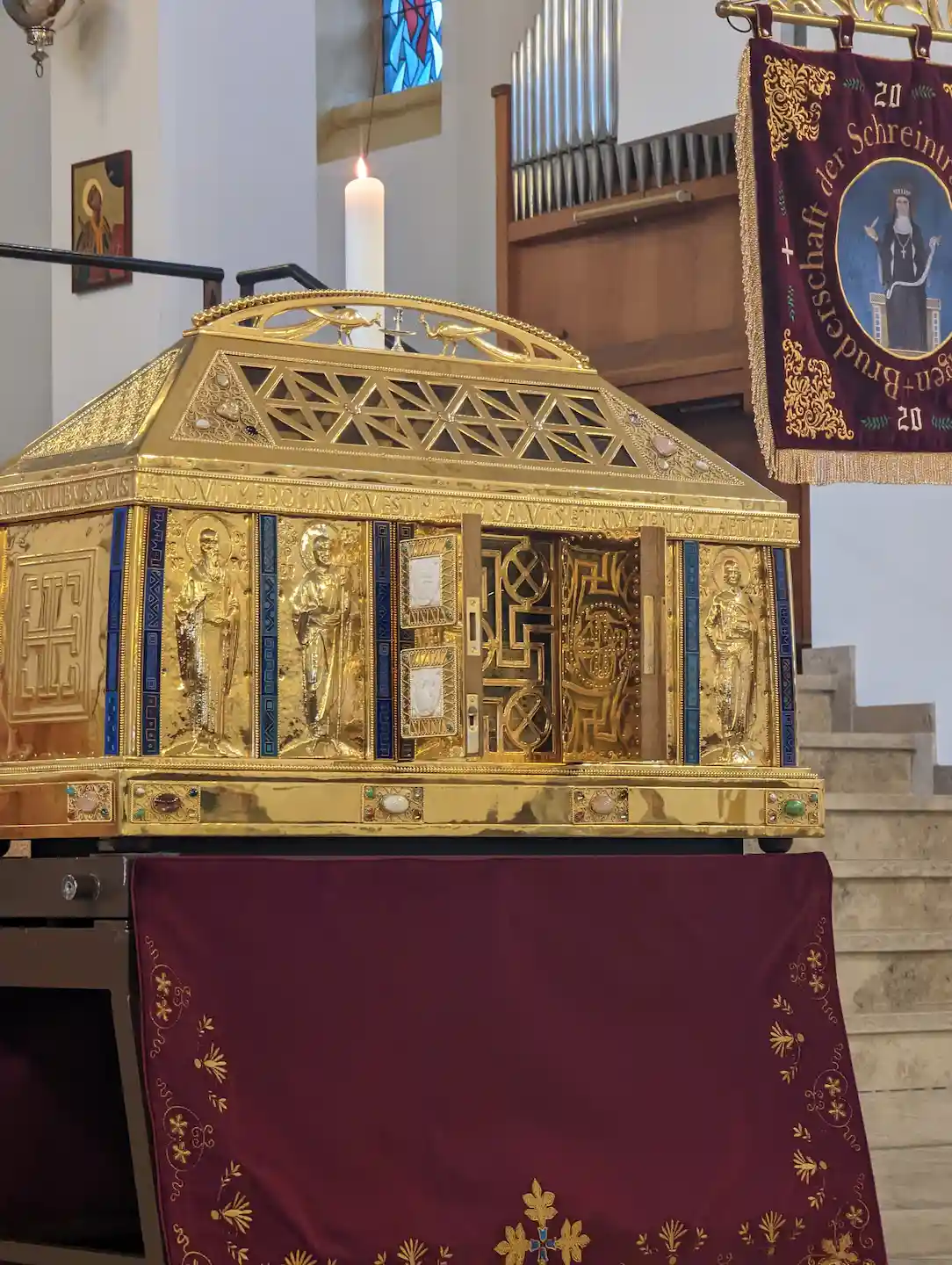
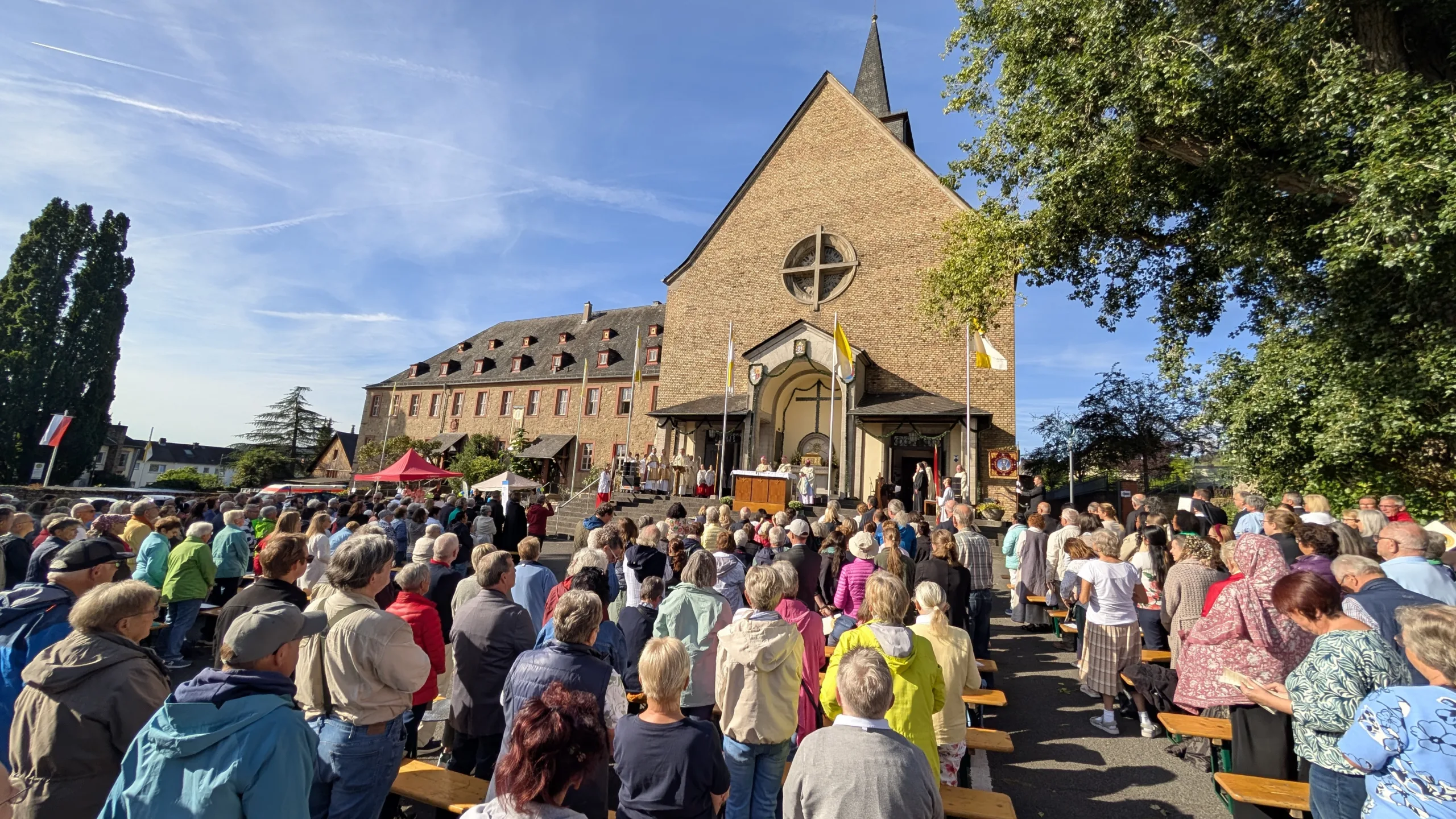
Established a second community across the Rhine at Eibingen, where her shrine and relics are kept to this day.
Death and Legacy
Hildegard died on September 17 — her feast day. She was canonized and named a Doctor of the Universal Church in 2012 by Pope Benedict XVI.

The Films
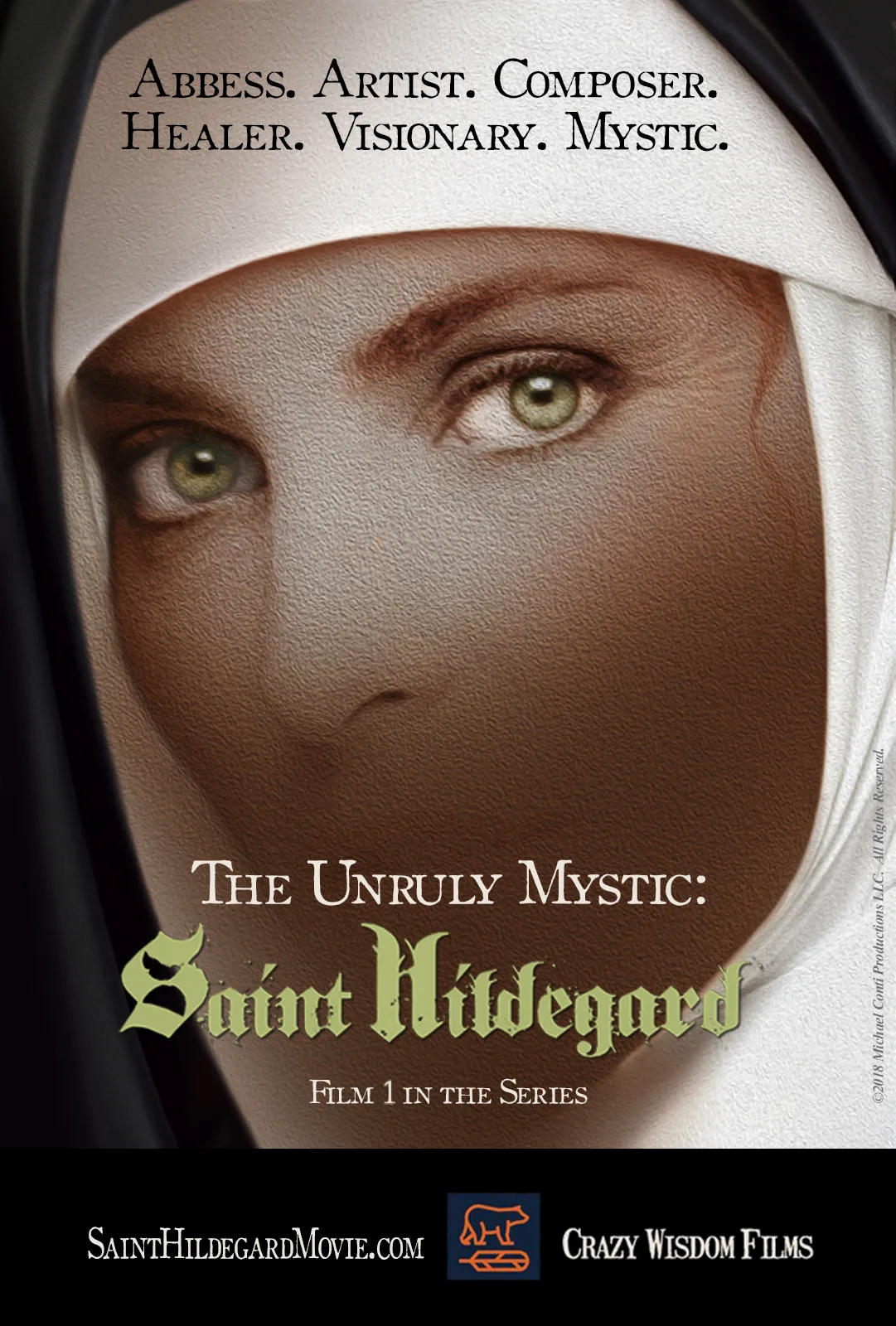
Filmmaker-pilgrim Michael M. Conti has dedicated a decade to bringing Hildegard’s story to the screen. The documentary series explores her life, music, theology, and the landscape she called home.
Walk in Her Footsteps
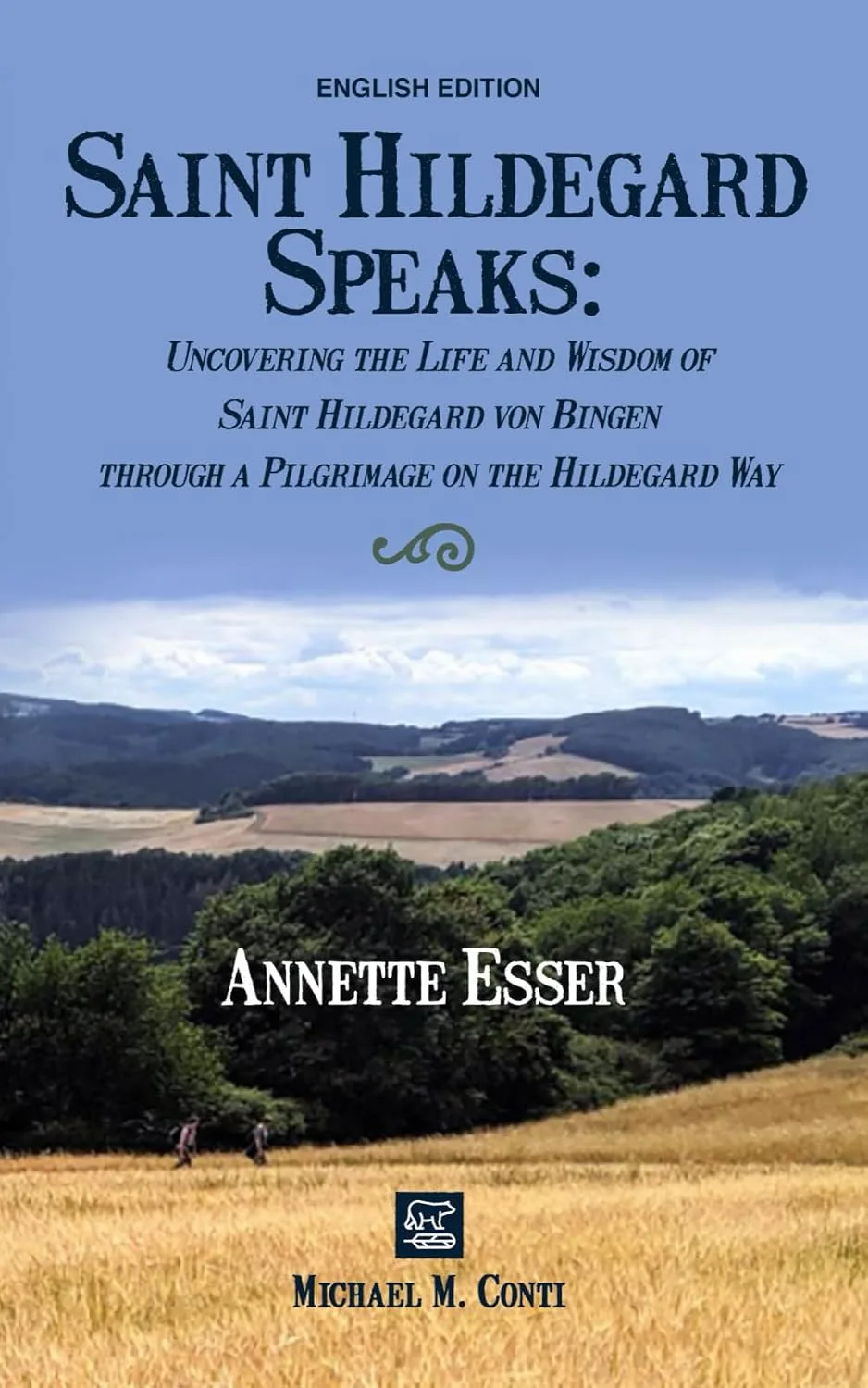
The official Hildegard Pilgrimage Route through the Rhineland winds 135 km through the landscape she called home — past the ruins of Disibodenberg, through medieval villages, along the Rhine to the Abbey at Eibingen. Hildegard died on September 17, 1179, putting her 850th anniversary in 2029 — three years out — and we’re already thinking about how to mark it.
“The path is not long, but the way is deep. You must not only walk there, you must be prepared to leap.”
This text was written by Elaine Bellezza and published in a 1991 issue of Gnosis magazine in an article titled “Hildegard of Bingen, Warrior of Light”
From the Blog
Books, Films & the Hildegard Collection
Explore her world — from films and scholarship to the herbs she loved.


As an Amazon Associate, Crazy Wisdom Films earns from qualifying purchases.
Part of the Crazy Wisdom Films family
Ready to walk the land where Hildegard lived?