What Is Viriditas? Hildegard’s Greening Power Explained
·
In the 12th century, a Benedictine abbess in the Rhineland of Germany coined a word that has no precise equivalent in any modern language. That word is viriditas — and it may be Hildegard von Bingen’s single most enduring contribution to human thought.
What Does Viriditas Mean?
The word viriditas comes from the Latin viridis — green. But its meaning in Hildegard’s theology is far richer than a simple color. The definition is both literal — greenness, growth — and metaphorical: vigor, verdure, freshness, vitality. For Hildegard, the spiritual aspects were just as essential as the physical meaning.
The origin of the word may be the union of two Latin words: green and truth. But like most Latin words, viriditas does not easily translate into convenient, straightforward English — and there is beauty in that complexity. It is a word that insists on being held whole, not reduced.
“Be it greenness or seed, blossom or beauty — it could not be creation without it.”
Hildegard von Bingen
Viriditas as the Divine Life Force
Translated as “greening power,” viriditas can be described as the divine life force that lives and breathes within all living beings. This potent force is full of vitality, moisture, and fecundity — able to bring creativity and health into the world. It makes all things grow, expand, and thrive.
Hildegard imagines the entire Trinity as the source of this life-giving viriditas: God the Father as the source of the greening power, the Holy Spirit as “green fire” — the fire of God that animates all life — and Jesus as the “green word” because of his life-giving action in life, death, and resurrection.
This was not poetic flourish for Hildegard. It was a literal cosmological principle — a way of understanding how God is present in the world not as a distant authority but as the very vitality that pulses through every living thing. The forests she walked in the Rhineland, the vineyards along the Nahe River, the herbs she cultivated and studied — all of them were expressions of the same divine greenness.
“The soul is the green life-force of the flesh… When we humans work in accord with the strivings of our soul, all our deeds turn out well.”
Hildegard von Bingen
The Sin of Drying Up
To understand viriditas fully, you need to understand its opposite. Hildegard contrasts greening power with the sin of drying up. A dried-up person or a dried-up culture loses the ability to create. Hildegard saw this as a grave sin and a tragedy.
It also describes how she felt about herself during the years when she was refusing to write down her visions and voices. Her awakening did not occur until she embraced her own viriditas. From then on Hildegard was constantly creating.
This is one of the most personally resonant aspects of Hildegard’s theology — the idea that creative suppression is a spiritual failure. Not a minor lapse but a withering, a loss of the divine life force. And conversely, that to create — to write, to compose, to heal, to build — is to participate in the greening of the world.
Viriditas in Medicine and Healing
Hildegard’s concept of viriditas was not confined to theology — it ran through her medical writings as well. In her texts Physica and Causae et Curae, she understood illness as a loss of viriditas and healing as its restoration. It is the force that returns, after being absent, when healing occurs after an illness. We experience it in the dynamic growth of plants in nature as well as our own sense of health.
Her approach to herbal medicine was grounded in this understanding. Plants did not simply contain active chemical compounds — they contained viriditas. A healer’s task was to work with the greening power of creation to restore balance and vitality to a body that had dried out, grown cold, or lost its moisture. It is a holistic framework that integrates the physical, spiritual, and natural worlds with remarkable coherence.
Viriditas and the Rhineland
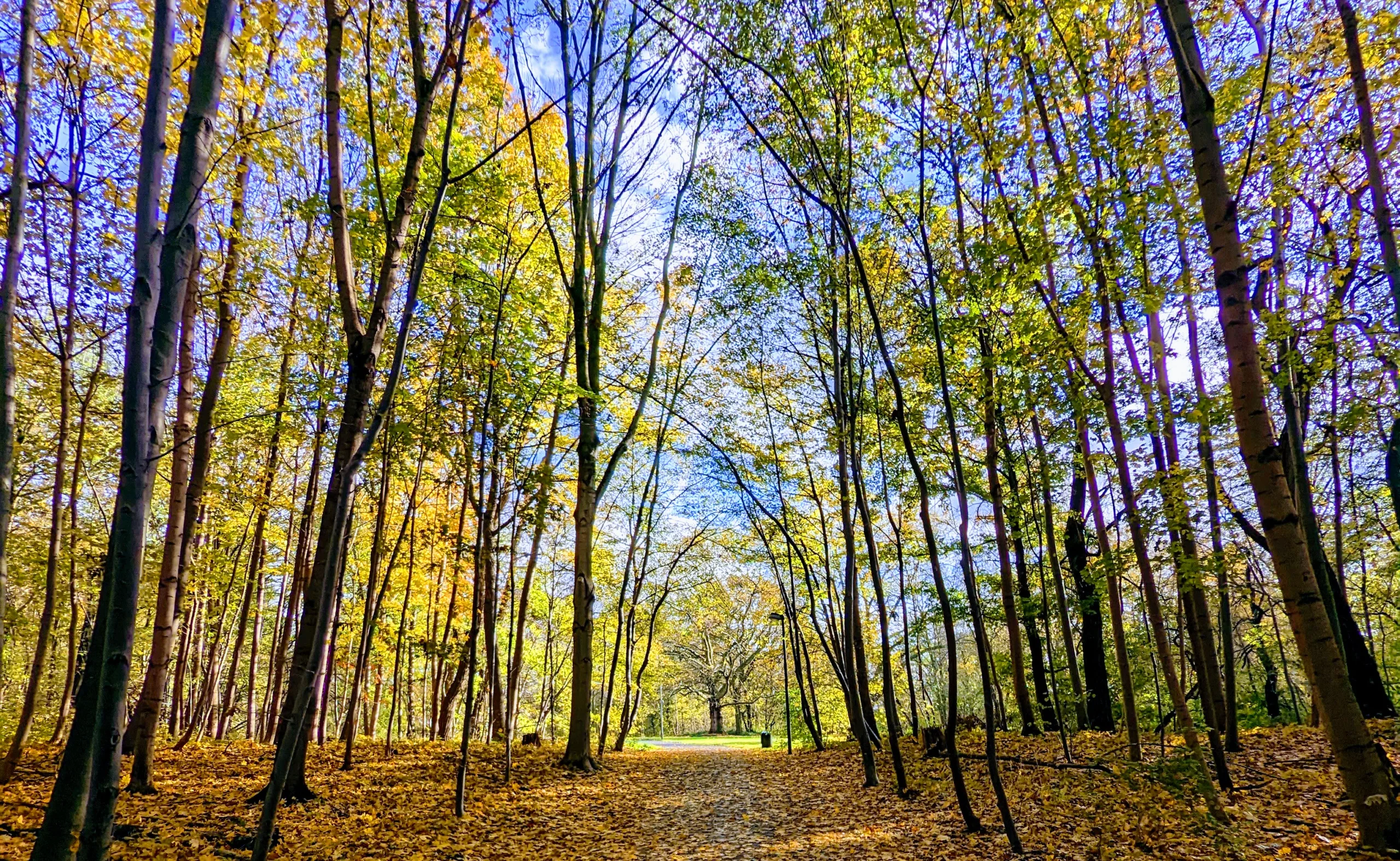
It matters that Hildegard lived in the Rhineland. Greening was a very important category for her, since she lived in the Rhineland, which is a richly green area. The Nahe River valley, the forests around Disibodenberg, the vineyards above Bingen, the Rhine itself — this is one of the most lushly fertile landscapes in Europe. Hildegard did not invent viriditas in the abstract. She saw it every morning outside her window.
Walking the Hildegard Way today — through those same forests, past those same monastery ruins, along that same river valley — you feel what she was describing. The landscape is not a backdrop to her theology. It is its source.
Why Viriditas Matters Today
Viriditas has found new resonance in our own era — in environmental theology, integrative medicine, creation spirituality, and the growing movement to reconnect Christian thought with the natural world. The stewardship of Earth’s life-force is not merely our moral obligation to the universe but our spiritual duty to our own souls. That is a thoroughly Hildegardian idea.
What would it mean for us to be filled with viriditas — the creative power of life, God’s greening power? How would that affect our malaise, our apathy, our indifference? How would it affect our relationships, our work, our communities? Hildegard believed that God was the source of all viriditas — but also that we all carry it within us.
“Glance at the sun. See the moon and the stars. Gaze at the beauty of earth’s greenings. Now think — what delight God gives to humankind with all these things.”
Hildegard von Bingen
Experience Viriditas in the Land of Hildegard
Viriditas is not just a concept to be understood — it is an experience to be felt. Walking the forest paths of the Rhineland in September, standing in the ruins of Disibodenberg, watching the procession of Hildegard’s reliquary through the streets of Eibingen on her Feast Day — these are encounters with the living landscape that gave birth to her theology. Join us this September and feel what she described.
Further Reading
- About Saint Hildegard von Bingen — theology, music, medicine, and art
- Who Was Saint Hildegard von Bingen? — an introduction to her life
- Hildegard’s Music — The Ordo Virtutum Explained
- Walking the Hildegard Way in Germany
- YouTube Channel — more videos on Hildegard’s life and legacy