No Beautified Halo: Dietburg Spohr on Hildegard’s Ordo Virtutum
·
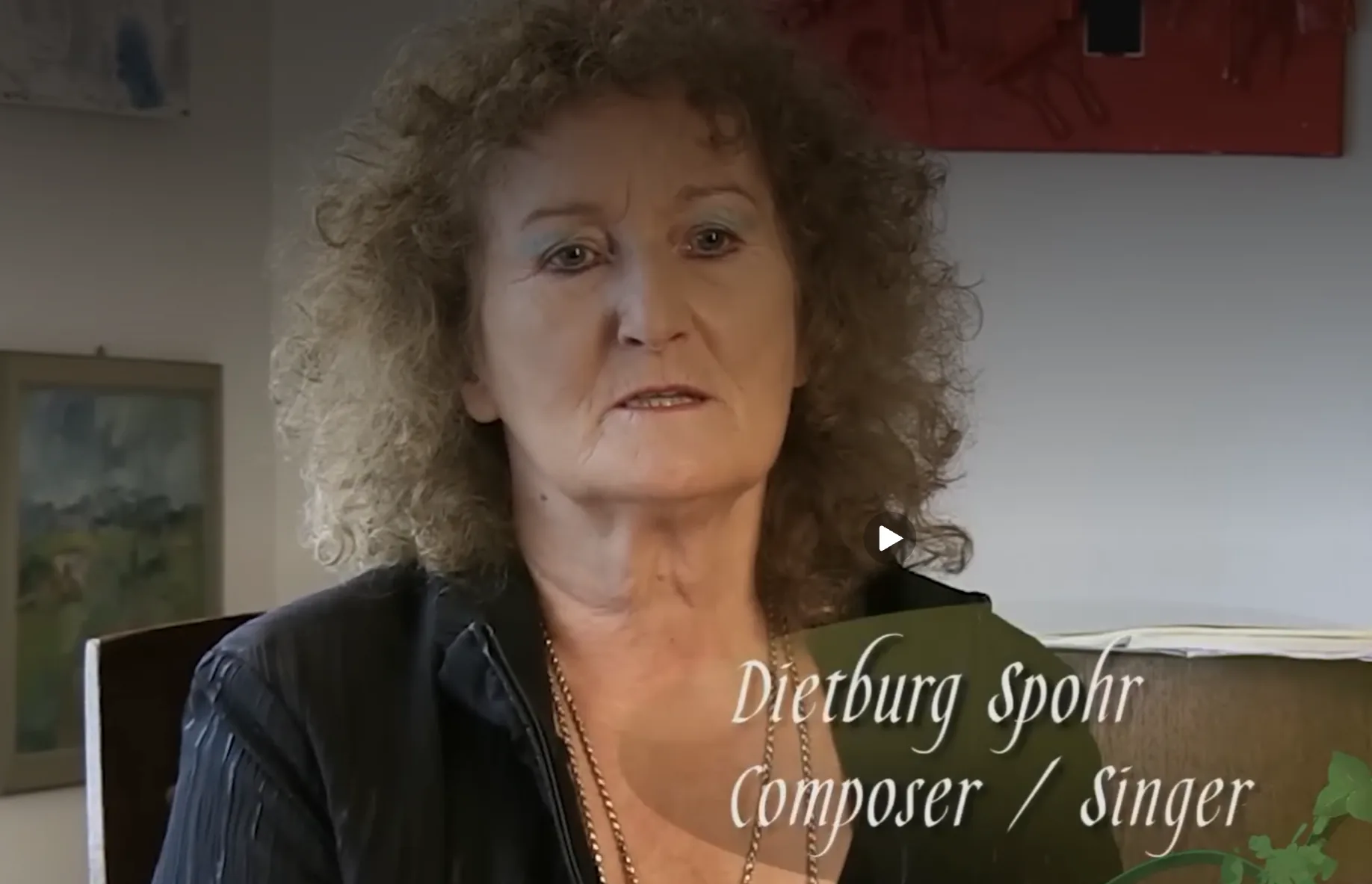
When I made my first film on Hildegard, The Unruly Mystic: Saint Hildegard, I travelled to meet the people whose lives she had changed — theologians, doctors, artists, and musicians. Among the musicians, Dietburg Spohr stayed with me.
Spohr is a mezzo-soprano who founded Ensemble Belcanto in Stuttgart in 1986. Belcanto made its name not in early music but in new music — composers like Wolfgang Rihm wrote for the ensemble. She hears no wall between the two worlds: Hildegard’s music, in her hands, becomes a bridge between the Middle Ages and the music of our own time.
What she said to me was simple, and honest. Hildegard’s music was largely ignored for centuries. We simply do not know how, or where, it was originally performed. What we can surmise is that this music — heard, and transcribed through the spirit — was her worship. And it is that quality, beyond any commercial image of Hildegard, that accounts for its innovation and its longevity.
Her recording of the Ordo Virtutum — Hildegard’s morality play of around 1150, generally considered the first large-scale musical work beyond the prescribed form of the Mass — makes the same refusal. Recorded in Frankfurt in October 2010 and released on ECM New Series in 2013, it does not chase historical objectivity, and it does not wrap Hildegard in what the album’s notes call emotive sonic incense. It does her more justice, those notes say, than a beautified halo. Spohr treats the Ordo as if a medieval composer had written it for a contemporary vocal ensemble — contrasts sharpened, the drama left unsentimental, the Soul’s struggle with the Virtues and the Devil allowed to sound strange, as it must have been.
That is the Hildegard I keep returning to on the Hildegard Way: not a halo, but a live wire. A composer. An emancipated woman of the twelfth century whose work still asks something of us — to slow down, to listen, and to let the ordinary touch the divine.
Listen to the album: Hildegard von Bingen: Ordo Virtutum — Ensemble Belcanto, Dietburg Spohr (ECM Records)
And read Tyran Grillo’s review of the recording — Grillo later reviewed this film, and his verdict on Spohr’s Ordo was that Belcanto is “not making the music new but rather fortifying its antiquity”: Between Sound and Space, 15 May 2015
— Michael
The film above opens at the moment (20:32) where Dietburg Spohr speaks, in The Unruly Mystic: Saint Hildegard (2014). Watch the full film on YouTube: https://youtu.be/M54pY9k18aA — or at sainthildegard.com