Category: pilgrimage

  • What Are the Three Most Important Experiences for a Pilgrim on Their Sacred Pilgrimage?

    What Are the Three Most Important Experiences for a Pilgrim on Their Sacred Pilgrimage?

    It’s important to note that the significance of these experiences can vary depending on the individual and their motivations for undertaking the pilgrimage. Here are three commonly valued experiences that many pilgrims find significant during a pilgrimage:

    1. Spiritual Connection and Reflection Pilgrimage

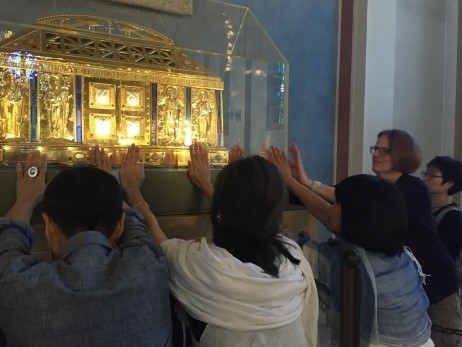
    Hands-on pilgrimage at the Hildegard Shrine Church

    For many pilgrims, the primary purpose of a pilgrimage is to foster a deep spiritual connection. This experience often involves moments of reflection, prayer, meditation, or seeking a sense of transcendence.

    2. Personal Transformation and Growth

    Pilgrimages are often seen as journeys that can change a person in a deep way. The pilgrimage can be physically challenging, and the pilgrim gets to experience new places and cultures. The journey makes the pilgrim think about their own life and who they are, and this can make them more aware of themselves.

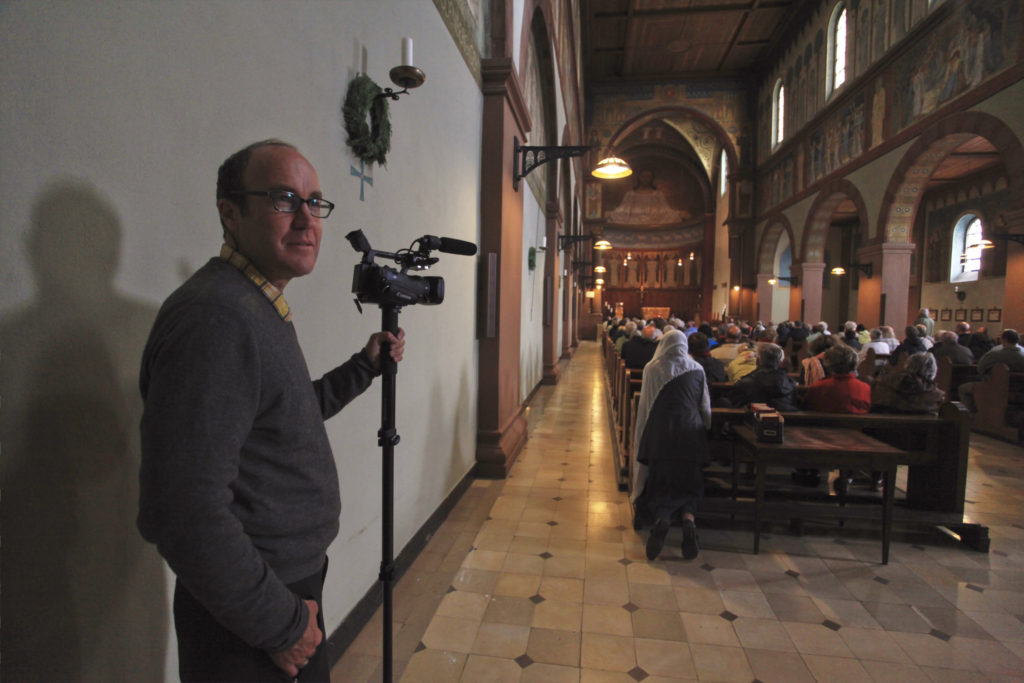
    Pilgrimage inside the Saint Hildegard Benedictine Abbey
    Pilgrimage inside the Saint Hildegard Benedictine Abbey in Bingen, Germany

    3. Cultural and Historical Immersion Pilgrimage

    Pilgrimages often give you the chance to visit culturally and historically important places. Talking to local people, observing traditional activities, and discovering historical facts can make your pilgrimage more meaningful.

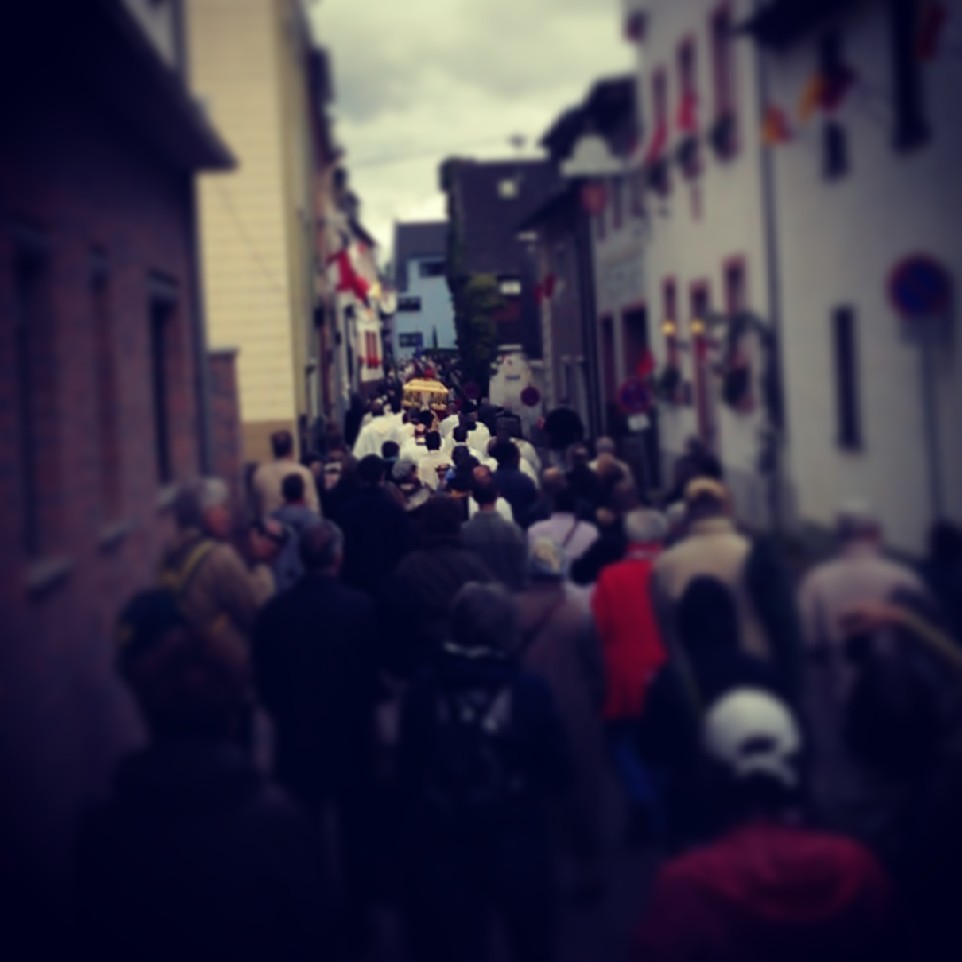
    Pilgrims on the Hildegard Path at Feast Day

    It’s important to note that the significance of these experiences can vary depending on the individual and their motivations for undertaking the pilgrimage. Some may prioritize spiritual connection above all else, while others may focus more on the cultural and historical aspects. The three experiences mentioned above are common threads that many pilgrims find meaningful, but the personal significance can differ for each individual.

    Based on a YouTube Channel Community Survey asking “what is the most significant valued experience that you, as a pilgrim, find during your journey?” The answer is more pilgrims prefer spiritual connection and reflection over cultural and historical immersion, second only to personal transformation and growth.

    The Hildegard Way: A Journey of Spiritual Connection, Personal Transformation and Cultural Immersion

    The Hildegard Pilgrimage is a spiritual journey that follows the footsteps of Hildegard von Bingen, a prominent medieval mystic, composer, writer, and visionary. It is inspired by her life, teachings, and profound spiritual insights. The pilgrimage route typically starts in the town of Idar-Oberstein in Germany and leads past the medieval abbey of Disibodenberg, where Hildegard began her religious life as a nun, and ends at the current Benedictine Abbey of St. Hildegard in Bingen.

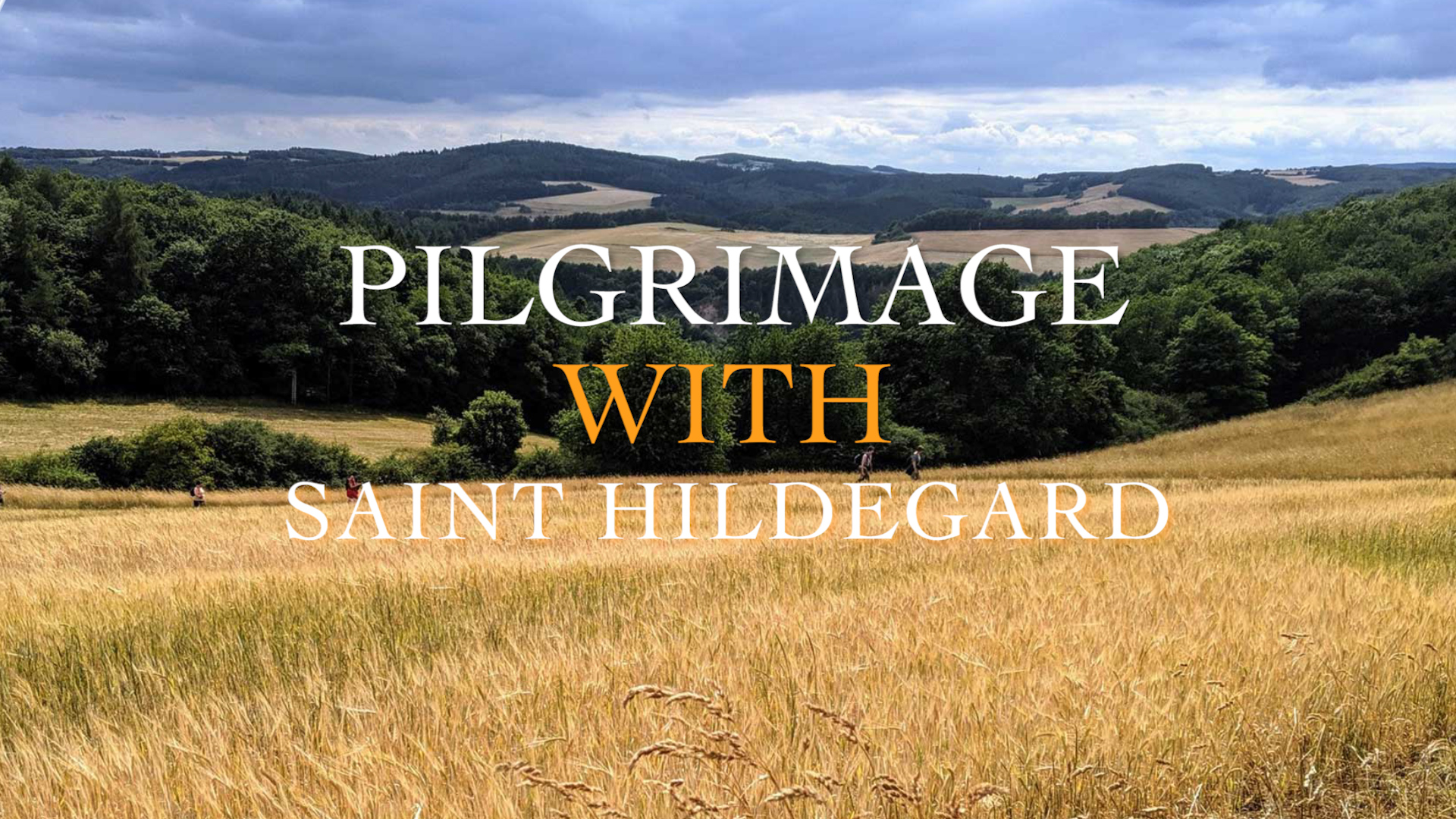
    The Hildegard Way covers approximately 136 kilometers (85 miles) through the beautiful landscapes of the Rhineland-Palatinate region in Germany. Along the route, pilgrims pass through picturesque villages, rolling hills, vineyards, and dense forests, immersing themselves in the natural beauty that inspired Hildegard von Bingen.

    Learn from the 59 tableaus along the Hildegard Way

    The pilgrimage offers a unique opportunity for participants to connect with Hildegard’s spiritual legacy. Along the way, there are several significant sites associated with her life, including churches, monastic ruins, and historical landmarks. These locations often serve as places for reflection, prayer, and contemplation, inviting pilgrims to delve deeper into Hildegard’s teachings and philosophy.

    Pilgrims at the shrine church

    The Hildegard Way pilgrimage is not only a physical journey but also a spiritual quest. Pilgrims have the opportunity to engage in spiritual practices, attend prayer services, and participate in guided reflections focused on Hildegard’s spirituality. The pilgrimage encourages personal introspection, seeking a deeper understanding of oneself, and connecting with the divine.

    Throughout the journey, pilgrims may experience a sense of kinship with other participants, sharing stories, insights, and a common purpose. The pilgrimage fosters a sense of community and offers opportunities for companionship and support along the way.

    To encourage you to “walk with a saint,” read these texts out loud, hearing how Hildegard might have sounded, as you take your own pilgrimage along the Hildegard Way. We suggest doing this on the first nine stages of the Hildegard Way at the very spots which are marked by photos ahead of the nine chapters.

    Holistic pilgrimage experience

    The Hildegard Way pilgrimage is a meaningful and transformative experience for those seeking a spiritual connection, inspiration from Hildegard’s teachings, and a chance to embark on a journey of personal growth and self-discovery. It combines the elements of physical movement, natural beauty, historical significance, and spiritual exploration, creating a holistic pilgrimage experience.

    An Abbey with a View

    To learn more about the Hildegard Way pilgrimage, you can follow these steps:

    1. Research Online: Start by conducting an online search using keywords like “Hildegard Way” or “Hildegard pilgrimage.” This will provide you with a wealth of information, including websites, articles, travel blogs, and forums dedicated to the pilgrimage. Explore these resources to gather details about the route, historical sites, experiences of past pilgrims, and any organized events or groups associated with the pilgrimage.
    2. Guidebooks and Literature: Look for guidebooks or books specifically written about the Hildegard Way pilgrimage. These resources often provide comprehensive information about the route, historical context, points of interest, maps, and suggested itineraries. Some books may also delve into Hildegard’s life, teachings, and spiritual insights, enriching your understanding of the pilgrimage.
    3. Contact Pilgrimage Organizations: Reach out to pilgrimage organizations, church groups or associations that may offer support and information about the Hildegard Way.
    4. Local Tourist Information Centers: Contact local tourist information centers or visitor bureaus in the region where the Hildegard Way is located. They can provide you with up-to-date information, maps, and resources about the pilgrimage. They may also be able to assist with logistical aspects, such as transportation, accommodation, and local attractions in the area.
    5. Connect with Pilgrimage Communities: Look for online forums, social media groups, or communities dedicated to pilgrimage and spiritual journeys. Engaging with fellow pilgrims who have undertaken the Hildegard Way can provide valuable insights, tips, and personal experiences. They may share photos, stories, and recommendations that can enhance your understanding of the pilgrimage.
    6. Attend Pilgrimage Events or Workshops: Keep an eye out for any pilgrimage-related events, movies, workshops, or lectures that focus on the Hildegard Way. For example, virtual pilgrimages often bring together experts, historians, and experienced pilgrims who can share their knowledge and provide a deeper understanding of the pilgrimage.
    YouTube Video about the Pilgrimage with Saint Hildegard

    Remember to cross-reference information from multiple sources to ensure accuracy and reliability. By combining online research, printed resources, personal connections, and engagement with pilgrimage communities, you can gather a wealth of information about the Hildegard Way pilgrimage and prepare yourself for this transformative journey.

  • Saint Hildegard Virtual Pilgrimage 2021

    Saint Hildegard Virtual Pilgrimage 2021

    Offering a virtual pilgrimage again in September for Saint Hildegard, both live and pre-recorded. Besides the 12-days of recordings, there are live 2-days of virtual events over Saint Hildegard’s Feast Day, September 17 & 18, 2021. 

    (BOULDER, CO August 2021) For a second year in a row, Michael Conti Productions presents “Saint Hildegard Virtual Pilgrimage 2021” beginning on Monday, Sept 6 at Noon EST and concluding the day after Saint Hildegard’s Feast Day on Sept 18, 2021.

    For twelve days, you’ll experience videos with contemplative spiritual direction from an American follower of Hildegard; new videos that are elegant and divinely inspired from “Saint Hildegard Speaks” stations along the Hildegard Way in Germany; academic and theological short talks on themes in Hildegard’s life.

    The 2-days of Virtual Feast Day Events runs September 17 -18, 2021. It starts on September 17th at 1 PM EST, with the ringing of the bells from the Hildegard Haus in Fairport Harbor, Ohio, followed by a sermon by Rev. Dr. Shanon Sterringer. Rev. Dr. Matthew Fox who is the author of Illuminations of Hildegard of Bingen, Hildegard’s Book of Divine Works with Letters and Songs, Hildegard of Bingen, a Saint for Our Times: Unleashing Her Power in the 21st Century, will share some thoughts with us on the theme of this year’s offering: spirituality and creativity as seen through Hildegard’s natural medicine, art, writing and music.

    Other scheduled presenters are American writer Mary Sharratt (Illuminations: A Novel of Hildegard von Bingen), founder Dr. Annette Esser (Scivias Institute), children’s author Joyce Ray (Feathers & Trumpets), actor, playwright, composer and singer Grace McLean (In the Green), executive director Karen Cassidy (Hildegard House), writer David M. Dupuis (The Seven Keys of Hildegard), playwright Sarah Riehm (Living Hildegard), spiritual life coach Carl Johann Schroeder, medieval researcher Lauren Cole, artistic director Thomas Edward Morgan (Ars Nova Singers), composer Dr. Chris Piorkowski (The Unruly Mystic Series), singer Susan Lincoln (Singing in the Hildegarden), The Rev. Mary Reaman, and renowned herbalists Brigitte Mars and Kathi Keville (American Herb Association), etc.

    This ecumenical online pilgrimage has been created by pilgrim-filmmaker Michael M. Conti, with special contribution from Dr. Annette Esser, Director of the Scivias Institute and author of “Pilgerbuch: Hildegard von Bingen Pilgerwanderweg”. The pilgrimage was filmed during summer 2019 in Nahe district near Frankfurt, Germany.

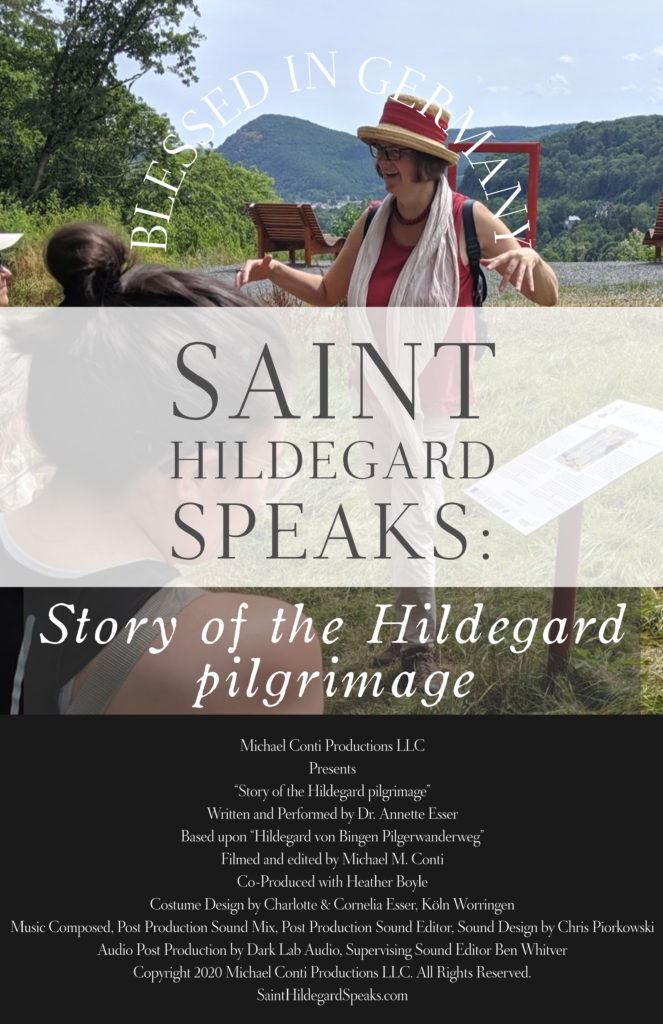
    The 85 mile (137 km) “Hildegard Way” is a trail through the Nahe river region in Rhineland-Palantinate in Germany. The idea for it is an inspiration from Dr. Annette Esser, the founder of Scivias Institute for Art and Spirituality. Dr. Esser speaks in character as “Hildegard” at 10 stations along the Hildegard Way and gives a small glimpse into the many teachings of Saint Hildegard.

    Saint Hildegard of Bingen was a 12th-century German Benedictine abbess who founded 2 monastic communities in the Rhineland-Palantine region of Germany and was a polymath active in theology, music, art, medicine, and healing, and philosophy. One of the most influential women in European history, Hildegard is noted as a Christian mystic and prophet and considered to be the founder of scientific natural history in Germany. She was formally cannoned by the Vatican in 2012 and is only one of 4 women who have been made a Doctor of the Church.

    Michael Conti Productions:

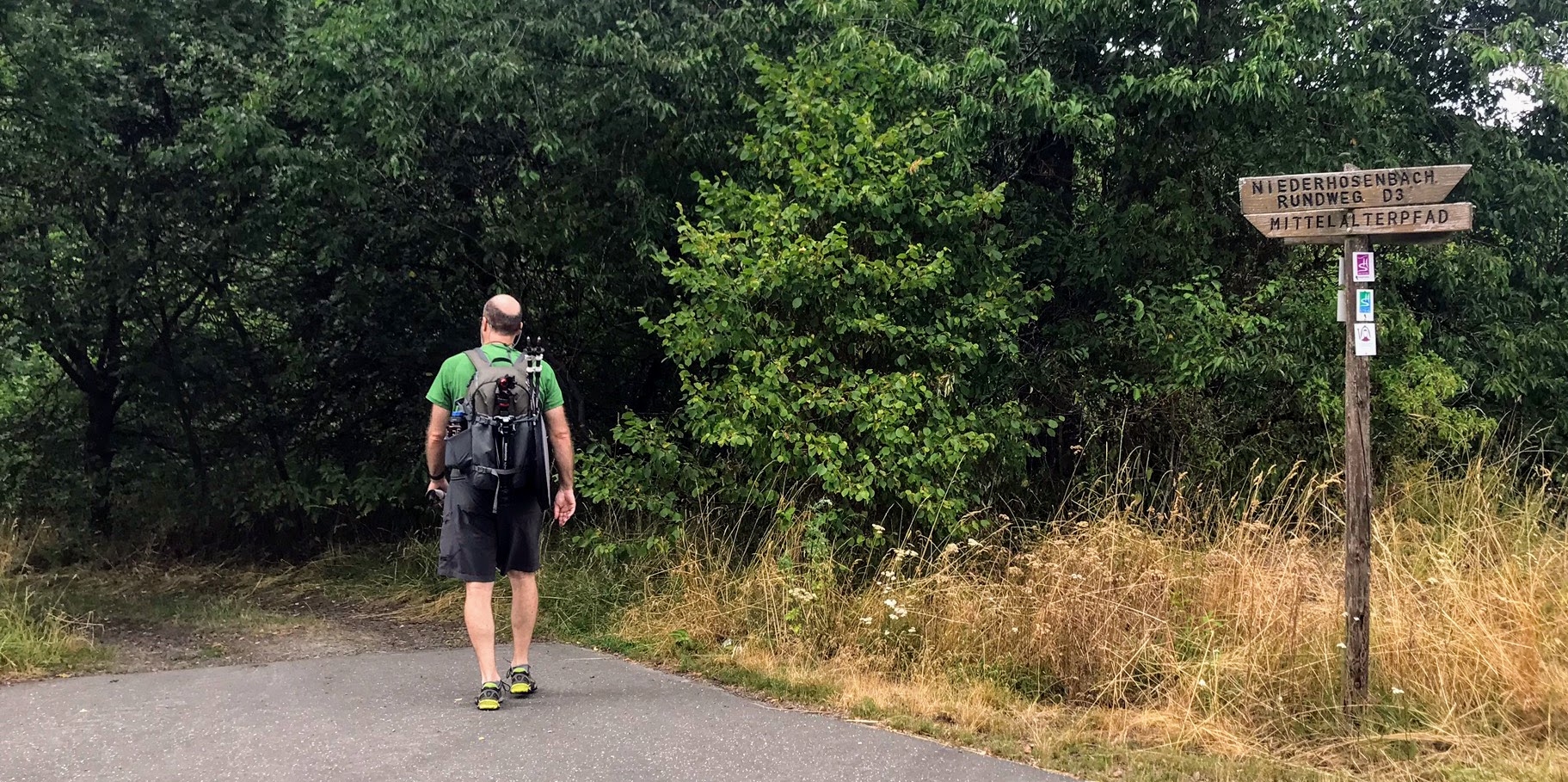
    Michael M. Conti, the creator behind The Unruly Mystic: Saint Hildegard, journeyed on Hildegard Way as a pilgrim-filmmaker and is sharing these offerings to you.

    Offering a virtual pilgrimage again in September for Saint Hildegard, both live and pre-recorded. Besides the 12-days of recordings, there are live 2-days of virtual events over Saint Hildegard’s Feast Day, September 17 & 18, 2021. 
    Offering a virtual pilgrimage again in September for Saint Hildegard, both live and pre-recorded. Besides the 12-days of recordings, there are live 2-days of virtual events over Saint Hildegard’s Feast Day, September 17 & 18, 2021. 
  • Saint Hildegard Speaks Press Release

    Saint Hildegard Speaks Press Release

    “Saint Hildegard Speaks” a virtual contemplative pilgrimage and short talk series through the land of Hildegard premieres September 6, 2020

    Press Release (BOULDER, CO August 2020) Michael Conti Productions presents “Saint Hildegard Speaks” beginning on Sunday, Sept 6 at Noon EST and concluding on Saint Hildegard’s Feast Day on Sept 17, 2020.

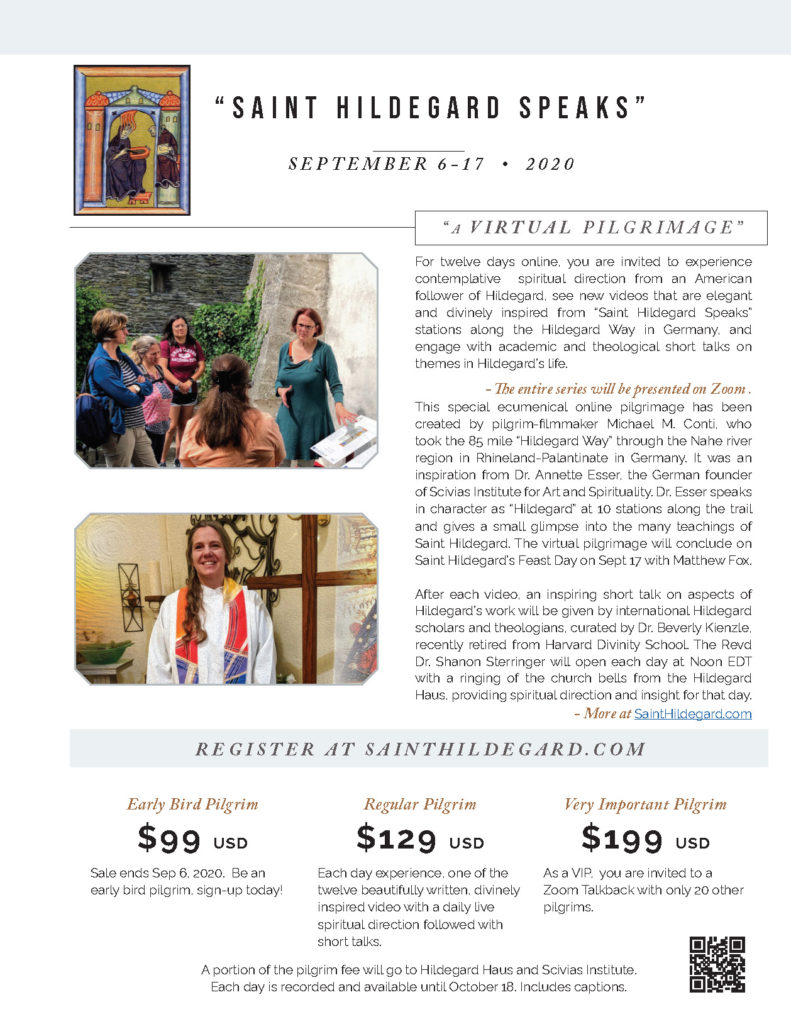
    For twelve days, you’ll experience online: contemplative spiritual direction from an American follower of Hildegard; new videos that are elegant and divinely inspired from “Saint Hildegard Speaks” stations along the Hildegard Way in Germany; academic and theological short talks on themes in Hildegard’s life.

    This ecumenical online pilgrimage has been created by pilgrim-filmmaker Michael M. Conti, with special contribution from Dr. Annette Esser, Director of the Scivias Institute and author of “Pilgerbuch: Hildegard von Bingen Pilgerwanderweg”. The pilgrimage was filmed during summer 2019 in Nahe district near Frankfurt, Germany.

    The 85 mile (137 km) “Hildegard Way” is a trail through the Nahe river region in Rhineland-Palantinate in Germany. The idea for it is an inspiration from Dr. Annette Esser, the founder of Scivias Institute for Art and Spirituality. Dr. Esser speaks in character as “Hildegard” at 10 stations along the Hildegard Way and gives a small glimpse into the many teachings of Saint Hildegard.

    The Reverend Doctor Shanon Sterringer will open each daily session at Noon EDT with a ringing of the church bells from the Hildegard Haus, an American Hildegard community in Ohio. Revd Dr. Sterringer will provide spiritual direction and insight to that day’s video and short talk.

    After each Hildegard Way station video, an inspiring short talk on different themes of Hildegard’s life and theology will be given by international Hildegard scholars and theologians, curated by Dr. Beverly Kienzle, recently retired from Harvard Divinity School.

    The virtual pilgrimage will conclude on Saint Hildegard’s Feast Day on Sept 17, with a special presentation by Revd Dr. Matthew Fox.

    The entire series will be presented on Zoom. Complete details and early bird registration information can be found at SaintHildegard.com.

    Who was the remarkable Hildegard of Bingen (1098 – 17 September 1179)? A Benedictine nun, she founded two women’s monastic communities, wrote visionary treatises and multiple theological works, designed illustrations, interpreted the Bible, composed liturgical songs, and developed works on natural science and medicine. Educated in the monastery and instructed though visions, Hildegard reached a level of literary and artistic production that was achieved by few men in the Middle Ages. She was named a Doctor of the Church in 2012.

    Hildegard was the only medieval woman who systematically interpreted the Gospels; that is, she explained the multiple meanings of biblical texts methodically and theologically. She achieved a rich, creative, and coherent presentation of Christian theology, from the origins of the world and humankind to the afterlife. She affirmed repeatedly that divine visions taught her the deepest meaning of the Scriptures,

    Viriditas, or greenness, a unifying capacity of nature, lies at the core of Hildegard’s natural science, medicine, cosmology, and theology. The life-giving power of the Holy Spirit offers hope, refreshment, and faith in God’s creation, even when human perversion destroys it.  For Hildegard, the lives and spirits of all creatures are interdependent—a crucial lesson for a world suffering from a pandemic and the destruction of natural life. Her belief in the interconnectedness of all living beings influences the international movements for integrative medicine and for environmental protection. Hildegard’s influence on healing, creation theology, and women’s leadership continues today, as evidenced by the spiritual pilgrimage to her homeland, so beautifully presented in the videos that follow.

    The Hildegard Way (“Hildegardweg”) was established with the support from the EU in 2013 and is a 137 km pilgrimage trail through the Nahe river region in Germany. The trail begins in Ida-Oberstein, leading past the monastery ruins of Disibodenburg and Hildegard’s Rupertsburg Abbey, concluding at the Abbey of Saint Hildegard in Eibingen. 59 information tableaux, designed and written by Dr. Annette Esser, are at stations along the trail, detailing some of the teachings, philosophies, theology of Hildegard, and feature visionary artwork from Hildegard’s book “Liber Scivas.”

    Michael Conti Productions:

    About Crazy Wisdom Films (CWF): Every generation when finding its own voice also rediscovers the teachers, mystics, geniuses, misfits, rebels, troublemakers from the past.  Films in the series to date include “The Unruly Mystic: Saint Hildegard” and “The Unruly Mystic: John Muir”.

    Press Release
  • Journal Entry from Hildegard Abbey

    Journal Entry from Hildegard Abbey

    At the Hildegard Abbey, we are taking a day of respite from having completed the Hildegard Way pilgrimage across Hildegard Land.  Setting fewer expectations allowed for an experience of seeing nature, making meaningful social interactions, and of course learning more deeply about Hildegard von Bingen. In many ways, it was like coming home as I haven’t been here since 2013 when I first started filming, The Unruly Mystic: Saint Hildegard.

    hildegard abbey
    Michael M. Conti in 2013. Photo by David Budd

    Hildegard Abbey

    This time, my experience is much more self-aware in that I have a greater appreciation for being back at both the familiar and new. Being with Heather (my wife) has added another layer of sweetness. We are staying at Hildegard Abbey for two nights which gives us some room for reflection. We are having our meals here in a separate area for visitors, but we have access to the non-public half of the abbey. Sitting in the cloister garden, we are both tired, spiritually, and physically, from the recent heat and pace we were setting. I am blessed with good video footage and success with my drone (almost losing it in a tree). While those excitements were fun, the question of why I am here is more profound in retrospect.

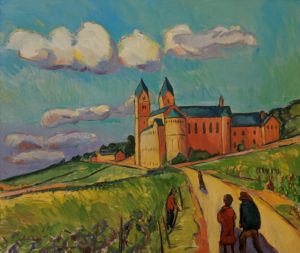
    Painting of the Hildegard Abbey

    There is the aspect of Hildegard as a person who invites one to connect deeper to good, and there is the work of Hildegard that connects one closer to God. Both pathways lead to self-reflection of one’s relationship to the spiritual self, community, and the larger cosmos of being present now. The more conservative view is deeply layered with God being the only reason for Hildegard to do what she did, it removes the individual from the action. While the Sisters praise all contributions from others through their offerings of art, they see that effort as continual evidence of God’s work.

    I see something different in the example as I feel the literal meaning of God is too limited. It goes to the river that we can all put our feet or whole body into, that connection to every without judgment and as a contribution to the larger good. It is the source of the Godhead Wisdom Pillar or whatever you call it. Hopefully, it is all the same thing in organized religions as in my heart.

    Michael Conti’s Journal Entry from July 28, 2019

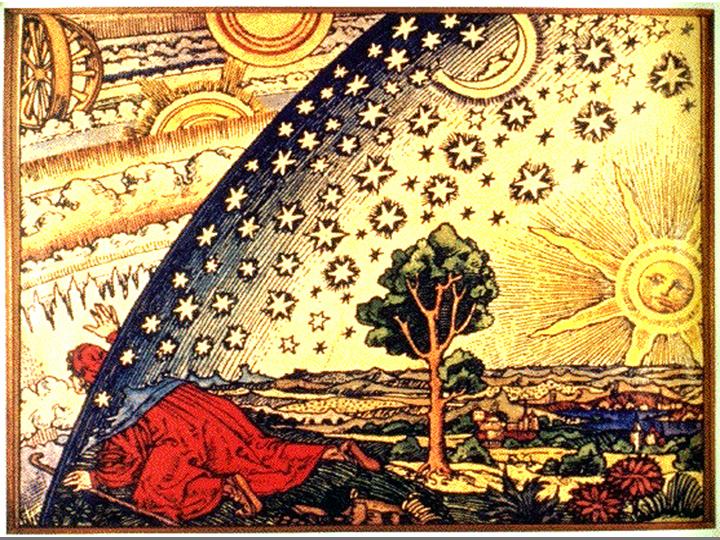
    Wonder has permeated mankind since its beginning.

    What is your experience with visiting a meaningful place twice?

  • Journal Entry from Hildegard Feast Day

    Journal Entry from Hildegard Feast Day

    feast day
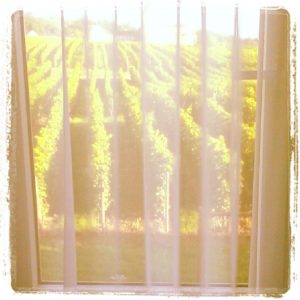
    A room with a view of the abbey’s vineyard

    Feast Day for Hildegard von Bingen

    On September 17th, I am in Germany to attend the Feast day for Hildegard of Bingen. This experience profoundly altered my perception of Saint Hildegard’s significance to German Catholics. Prior to this event, I had only known her as a historical figure, a medieval mystic, and a celebrated composer, but witnessing the devotion of the people during the procession breathed new life into her legacy.

    Walking behind her figurative presence through the bustling streets, with her golden relic leading the way, was an experience that resonated with a deep sense of honor. It was as though I was walking in the footsteps of history, joining a centuries-old tradition that had endured through the ages. The relic, gleaming in the sunlight, served as a tangible link to Saint Hildegard’s spiritual influence and enduring impact on the faithful.

    Yet, what struck me most was the communal aspect of the event. As I moved alongside the crowd, I felt a profound sense of unity and shared purpose. It was no longer just about filming or documenting; I became a participant in a collective expression of faith and reverence. In those moments, I was reminded that Saint Hildegard’s legacy was not merely confined to the pages of history or the confines of a church. Her spirit was alive and vibrant in the hearts of those who had gathered, and I felt privileged to be a part of that sacred moment.

    Saint Hildegard’s influence, as witnessed in that procession, was a reminder of the enduring power of faith and the ability of religious figures to inspire and unite generations of believers. It was a testament to the unbroken thread of devotion that binds the past, present, and future of German Catholics and, indeed, all those who find inspiration in the lives of saints.

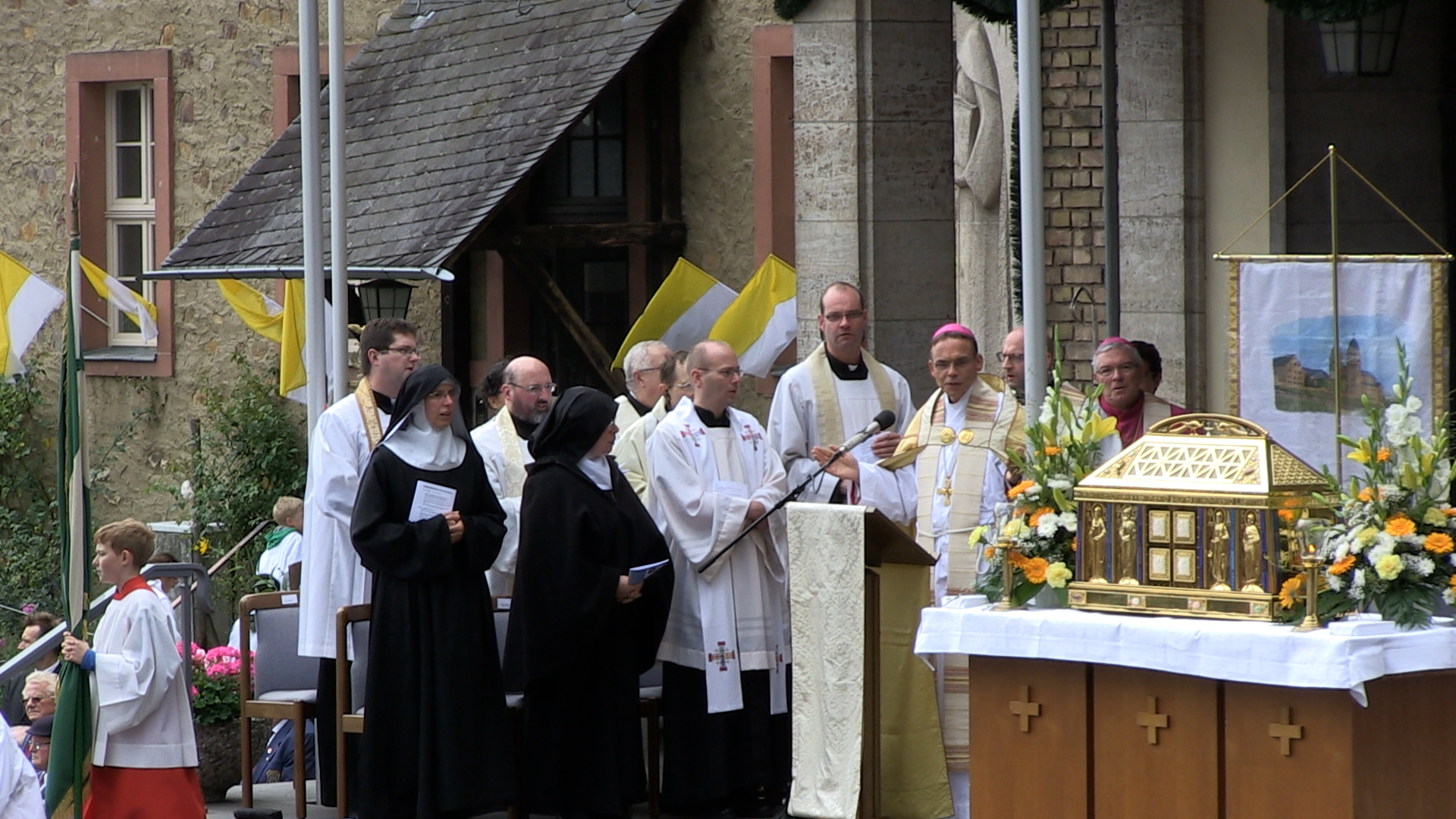
    Ceremonial sermon at feast day
    Hildegard von Bingen Feast Day, September 17, 2014. Officiated by Bishop Franz-Peter Tebartz-van Elst

    Here is a woman that people still worship more than 834 years later, and she is still felt like a living force. It is interesting how the Catholic tradition creates its ritual around a feast day, and I can see how the Middle Ages it still is. The people get spoken to by the priests and the head abbot, they make their offering, and then they get to walk with the relic through the village of Rüdesheim am Rhein, Germany which is like a blessing at every door.  The abbey had refreshments which consist of wine from the vineyards. White and yellow flags flew proudly for the Vatican Church as this was the first official feast day since she was canonized. It is a tradition worth more examination but one that I am proud to have witnessed.

    Michael Conti’s Journal Entry from September 18, 2013

    Video from feast day in Bingen, Germany

    What is a Catholic feast day?

    A Catholic feast day, also known as a liturgical feast or holy day, is a day on the liturgical calendar of the Roman Catholic Church that commemorates and celebrates a particular event or person of religious significance. These feast days are an essential part of Catholic worship and spirituality and are observed with special prayers, Masses, and sometimes specific customs or traditions.

    There are several types of Catholic feast days, including:

    Solemnities: These are the highest-ranking feast days in the liturgical calendar and often commemorate significant events in the life of Jesus Christ, the Blessed Virgin Mary, or important saints. Examples include Christmas (the birth of Jesus), Easter (the resurrection of Jesus), and the Feast of the Assumption (the bodily assumption of Mary into heaven).

    Feasts: These are significant but not as high-ranking as solemnities. Feasts commemorate important events or saints in the Catholic tradition. Examples include the Feast of the Immaculate Conception (Mary’s conception without original sin) and the Feast of St. Francis of Assisi.

    Memorials: Memorials are lesser feast days that honor individual saints, martyrs, or other figures in the Catholic tradition. Some memorials are obligatory, while others are optional. Examples include the Memorial of St. Anthony of Padua and the Memorial of St. Teresa of Ávila.

    Optional Memorials: These are feasts or memorials that are celebrated at the discretion of individual priests or parishes, and they may or may not be observed on a given day.

    Seasonal Feast Days: Some feast days are tied to specific liturgical seasons, such as Advent, Christmas, Lent, and Easter.

    The liturgical calendar is structured in a way that ensures that important events in the life of Christ and the Church, as well as the lives of saints and martyrs, are remembered and celebrated throughout the year. The specific feast days and their significance can vary among different Catholic rites and regions, but they play a vital role in the worship and spiritual life of Catholics worldwide.

  • Journal Entry at Shrine of Saint Hildegard

    Journal Entry at Shrine of Saint Hildegard

    Shrine of Saint Hildegard von Bingen is where my own mystic experience occured. We visited the Catholic Pilgrimage Church of St. Hildegard in Rüdesheim-Eibingen, Germany yesterday. This shrine church holds the relics of Saint Hildegard. Relic means that some aspect of that person or saint is kept on display for worship. In this case, it is the most potent of symbols, her tongue and heart are encased in a gold jewel box, known as an reliquary.

    Shrine of Saint Hildegard

    Our introduction to the relic was done by an enthusiastic Sister whose words were translated by a colleague in a dramatic and moving manner. I felt very connected to what she said and it transcended the Catholic dogma that seems difficult at times to wrap my modern head around. She (the Sister) then invited us up to stand in a circle around the relic made in gold and to hear her prayer. It was then followed by us offering up a Hildegard song. I suddenly found myself at ease singing, not really knowing the actual piece, but following along.

    After our group offering, the Sister invited us to ask Hildegard for support in our own lives such as sickness or illness, and voices called out each of those laments. I thought of my own immediate family. She then invited us to touch the relic box which is actually a case made of glass that covers the jeweled box.

    Shrine of Saint Hildegard
    Pilgrims touching the reliquary of Saint Hildegard

    I listen intently to the Sister, her excitement and vigor was contagious, even in a language that I don’t understand. The woman sitting in front of me was moved suddenly with the miracle of hearing after lacking that ability over several days prior. As we walked with reverence to surround the relic altar, I felt a quality of connectedness with Saint Hildegard. It was pure joy that I could be so close and my face got wet from tears. My body responded with a tingling sensation that went head to toe, and I felt pulsed if by an unseen force as I swayed back and forth with my eyes closed. My hand reached into my pocket to pull forth a green stone given by a friend for this specific trip. It was at that moment I realized that the stone was greening, a characteristic of Hildegard called Viriditas. I brought the stone up in front of my body as I prayed, and I noticed the other pilgrims doing the same with whatever they had brought there too. I noticed that I held this very journal in my pocket.

    I was left with the felling that the scared space and sensations that I had felt had reconfigured my longing to have a divine connection and I was in love with Saint Hildegard.

    Inside Saint Hildegard Abby

    I have spent most of my life in the pursuit of being creative or to create. Saint Hildegard is that patron saint of creativity for me. Her churches are filled with art and sculpture whose pure purpose is an expression of her ideas (and a devout Catholic would say her ideas are manifested to her by Jesus Christ, the son of God). These worldly art pieces are modern, expressive, and abstract, not purely figurative like what one would usually find hanging in a Catholic church.

    I realized that my mystic encounter with her is a form of expression which should make the point of presenting the mystery so that others will come to this place on their own. So that they may rekindle their own connection with the Saint, and take confirmation back to themselves and their own communities to help make the world a better place through love and creativity. There is no question in my mind that I had truly experienced Hildegard’s power. Each of us is divinely blessed with, as found in our own heart and tongue. This calling to minister her message will become my filmmaking endevour of The Unruly Mystic: Saint Hildegard.

    Michael Conti’s Journal Entry from March 18, 2013

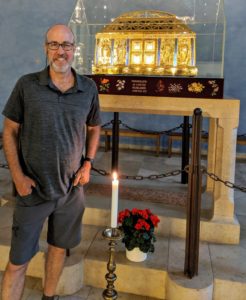
    Michael Conti in front of the Hildegard Shrine in 2019.
  • Journal Entry from Searching for Hildegard

    Journal Entry from Searching for Hildegard

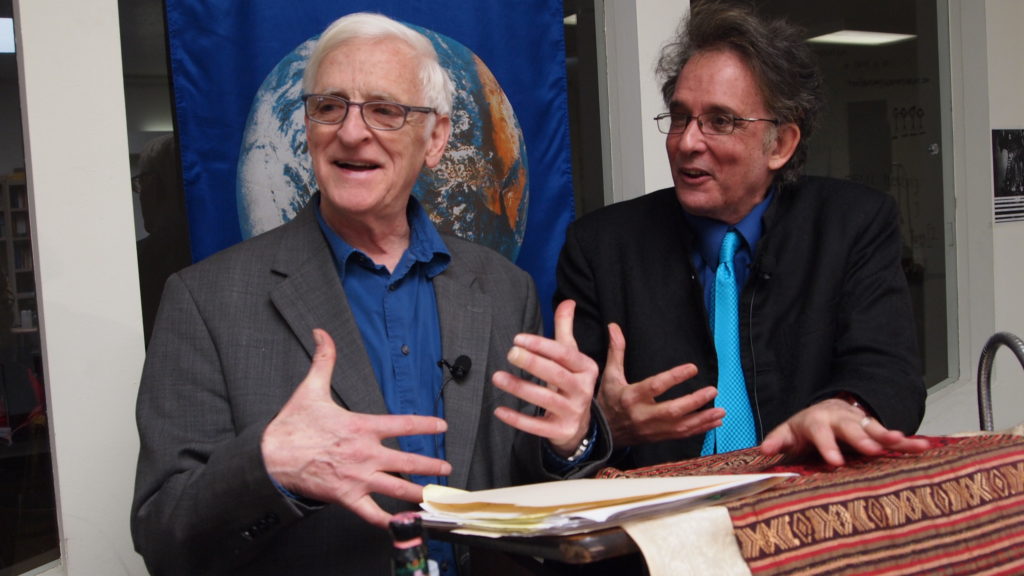
    Searching for Hildegard who was a mystery to me first, then became a divine inspiration, when I made a film about this Germanic Christian mystic. As a videographer, I have spent the time capturing lectures from several theologians. Specifically, Matthew Fox who spoke of her frequently during his series of Christ Path Retreat with Andrew Harvey.

    Matthew Fox and Andrew Harvey in Oakland, 2013, Photo by Michael Conti
    Matthew Fox and Andrew Harvey in Oakland, 2013, Photo by Michael M. Conti

    Questions About Hildegard

    • Was she someone real?
    • Why do some people know her and others just draw a blank stare?
    • Why am I attracted to this woman who lived 1000 years in the past?
    • What do people think about her now?
    • What would it be like to walk in her footsteps to find the source of her inspiration?
    • How has she influenced the thinking of today’s mystics, healers, and artists?
    • Why does she continue to speak to us today?

    The Great Awakener

    These are the sort of questions I awake in the divine early morning before the earth gets delighted by a new day. This is my journey.

    Michael Conti’s Journal Entry from October 19, 2012

    *First time Hildegard appears in my journal. Many of these questions which I asked, eventually got answered when I started to make The Unruly Mystic: Saint Hildegard six months later in 2013 when I went to Germany as a participant on a retreat there.

    In fact my first real exposure happened in 1996 when I was witness to Judy Chicago’s The Dinner Party.

    searching for hildegard
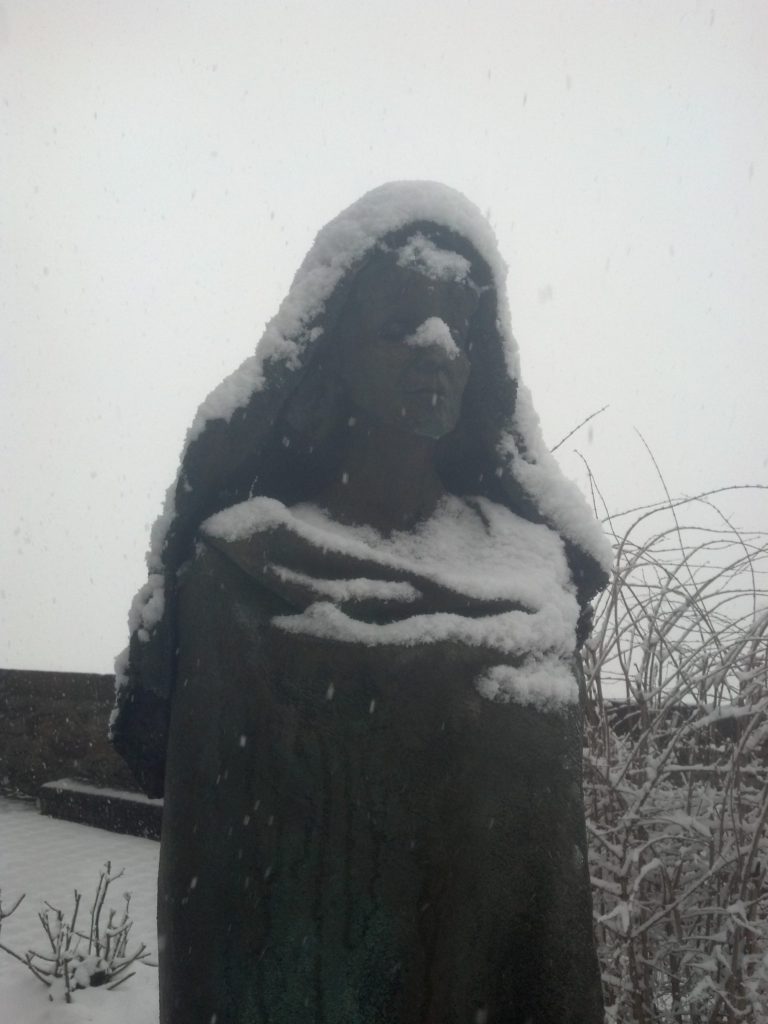
    Winter Hildegard